Redoing your kitchen or bathroom in marble? It may not be the most moral choice
Advertisement
Obsessions
Redoing your kitchen or bath in marble? It may not be the most moral choice
Luxury pattern is undergoing a conscience crisis, as catering to the demands of clients to deliver interiors filled with precious materials feels at odds with environmental sustainability and a world reeling from the touch on of the pandemic.
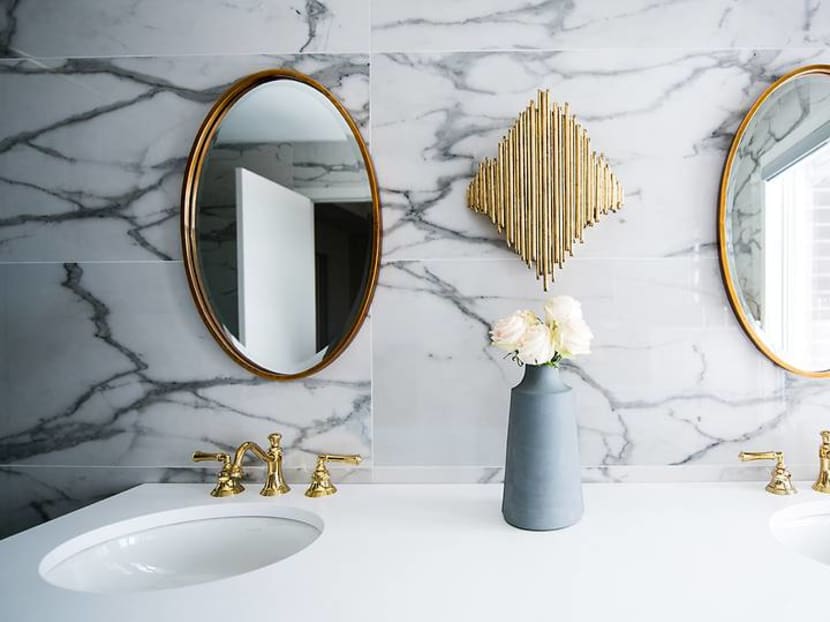
Every piece of marble in an interior volition leave a hole in the earth and, in some cases, risks the eventual extinction of over-quarried varieties, says Lebanese interior designer and architect Aline Asmar d'Amman. (Photo: Unsplash/Christian Mackie)
Berlin-based interior designer Marie de Beaucourt was discussing whether to use real or imitation slab marble in the bathroom of a luxury private jet for a client, when she had a thought.
"This is and then f****d up," she recalled. "I have a friend in Los Angeles who can't breathe, the Amazon is called-for – and this plane has to fly."
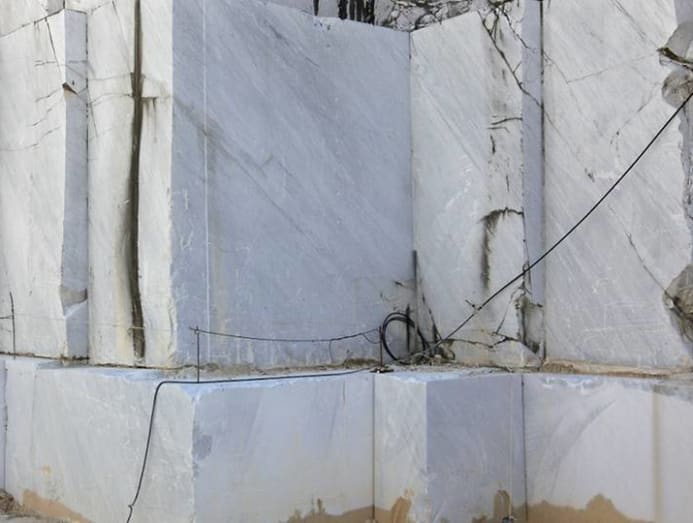
Slab marble, heavy and expensive, is too incredibly resource intensive. Marble is cut out of quarries in huge blocks, sliced into slabs and shipped across the world before being cut to fit kitchen countertops, pave gleaming floors and panel bathrooms.
For every slab of precious marble in a kitchen, an equal or greater amount of off-cutting marble is left in a quarry "graveyard", or landfill.
READ> Singapore pattern experts share: Interior design trends for 2021
De Beaucourt began to experience her loftier-terminate design piece of work, much of information technology in luxury hotels that were perpetually redecorating to stay relevant in an Instagram age, was also generating huge amounts of waste product and damaging the environment. "Information technology was a painful realisation," she said.
Luxury blueprint is undergoing an industry-broad conscience crisis, as catering to the demands of clients to evangelize cutting-edge interiors filled with precious materials feels increasingly at odds with ecology sustainability and a world reeling from the impact of the coronavirus pandemic.
And, designers say, there is a hit lack of conversation almost the trouble.
In an manufacture that has for decades ripped out the old and redecorated every few years, young designers, raised with an awareness of climate change and sustainability, are stuck betwixt a glossy stone and a difficult place. The speed of redesign has simply intensified as social media, such as Instagram and Pinterest, accelerates trends.
Slab marble kitchens are in vogue and surging in popularity, just as some high-end designers are questioning whether slab marble should be used at all.
ROCK OF AGES
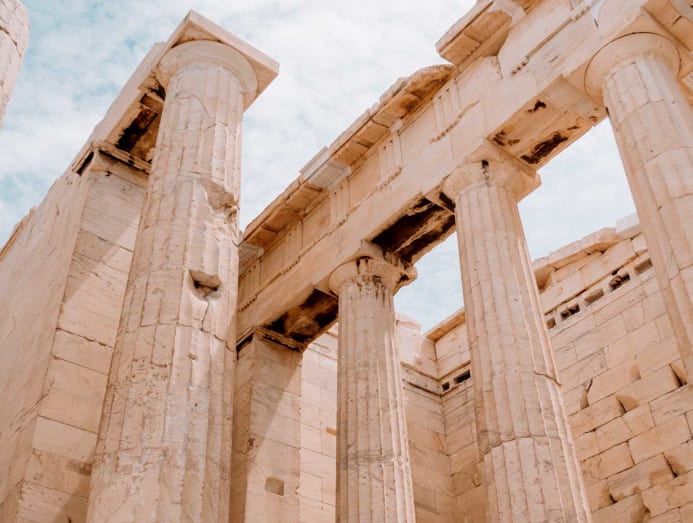
Marble has been one of the most enduring materials in architecture and design for thousands of years. It conjures images of Roman antiquity, of ruins left standing after war, atmospheric condition or fourth dimension has washed everything else abroad.
No ii pieces are the same. Dappled marble blocks vary in quality, texture and "vein", the streaks of colour that wind their mode through the metamorphic stone, the result of thousands of years of geological pressure. Each piece is its own work of art.
"When you buy a piece of marble you buy a piece of eternity," said Lebanese interior designer and architect Aline Asmar d'Amman. Marble is central to d'Amman'south design work, which she hopes volition concluding a generation rather than a few years. "It breaks my heart that marble is existence idea of as a trend," she said.
But she is also responsible for 1 of the most famous and virtually Instagrammed marble designs of the past decade: A bathroom in the 5-star Hotel de Crillon in Paris, a collaboration with the belatedly Chanel creative director Karl Lagerfeld.
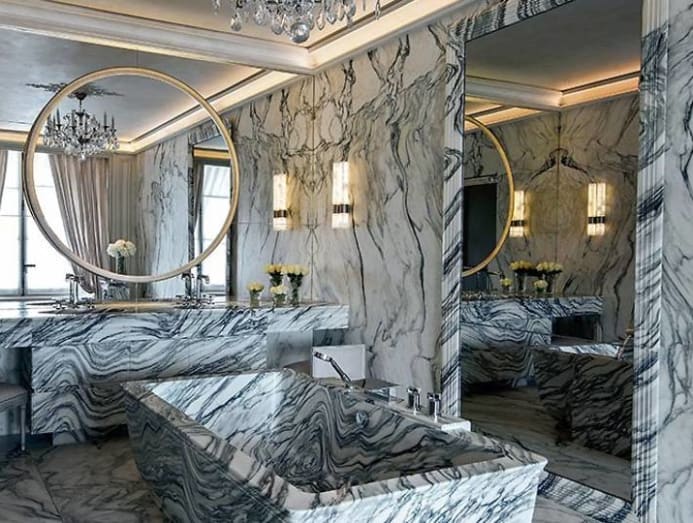
Constructed from ii blocks of rare marble – from an Italian quarry that has been closed for xxx years – the interior is an area of white stone snaked with black veins. The bathtub is cut from a single cake of Arabescato Fantastico marble.
As the affluent and design-minded go locked downward in their homes, interior designers say they are equally decorated equally ever. And marble dealers say they are doing the same, if not more, business organisation than in 2022 despite the pandemic, as people expect to bring more natural elements into their interiors.
But every piece of marble in an interior will leave a hole in the earth and, in some cases, risks the eventual extinction of over-quarried varieties, said d'Amman. Designers have an obligation to help their clients understand the materials that they are working with, and their origins. "Designers are supposed to sell knowledge, not just the blueprint," she said.
Clients have the final say, though. More sustainable materials can carry a loftier toll tag, or it may be more ethical to use a less trendy type of local stone, rather than import marble from abroad.
"When you buy a piece of marble you buy a slice of eternity. Information technology breaks my heart that marble is being thought of every bit a tendency." – Aline Asmar d'Amman
And in a visual globe, materials are nevertheless normally considered for aesthetics first, rather than ceremoniousness. Luxury designers have a reputation for talking more about sustainability than they do for incorporating it into their work.
"If the client is enervating something – it'southward an uphill boxing," said Grazyna Pilatowicz, professor of interior blueprint at New York's Fashion Institute of Technology and author of Eco-Interiors: A Guide to Environmentally Witting Interior Design. Sustainability has had less cut-through in the world of interior pattern compared with other fields considering of its exclusivity.
"For many years [interior design] was considered a luxury item, and being luxury, information technology wasn't considering whatsoever kind of responsibility to the public," said Pilatowicz.
Every bit socially conscious urbanites with a range of budgets look to source the well-nigh fashionable marble for their homes, cheaper marble of questionable origin appears in showrooms and designers are sounding the alarm bells.
READ> In demand of home inspiration? Accept a expect dorsum at 2020'south nigh unique house tours
A QUESTION OF PROVENANCE
"The worst worker exploitation in the globe is in the raw commodity world," said Patricia Jurewicz, founder of the Responsible Sourcing Network, a human being rights advancement group.
"It is the most subconscious and the nigh difficult to improve, because the brands consumers know and engage with are not the ones who purchase raw materials." There tin be three or 4 links in the supply chain between quarries and dealers selling marble to consumers.
Frequently marble is shipped thousands of miles to exist processed in Prc and India earlier being sold on again, making origins virtually impossible for retail consumers to rails.
International dealers point to some Italian marble vendors for the widely known and long-denied practice of buying cheap marble from quarries in Africa or Asia with fewer environmental controls than domestic quarries, cutting the marble in Italian republic and selling it on as an Italian product.
So who should shoulder the responsibility of sustainable design? Designers may have the responsibility to educate clients and source quality materials, simply lack terminal say. Private clients and hotel investors may take the obligation, but lack a fiscal incentive.
"Everyone likes to blame the factories," said Louisa Babin, the European sales manager at Mosaic Manufactory, a producer of terrazzo tiles. "But it'southward the people that buy."
SUSTAINABLE ALTERNATIVES
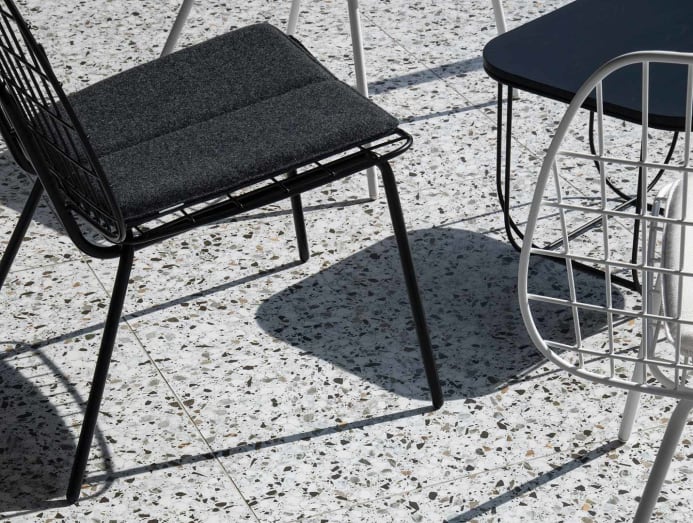
Terrazzo, a poured or precast surface adult hundreds of years agone that features constellations of waste product marble, is having a moment. "Nosotros're seeing people asking for more sustainable materials," said Babin.
Merely reusing materials tin can be more expensive than putting them in a landfill, and good intentions may lead to more than waste. When one customer wanted to ship a big marble floor to their factory to be repurposed into terrazzo, Babin said, "It's a beautiful thought in theory, only at that place'southward so much send involved, information technology doesn't make sense."
Enis Akiev, a Berlin-based designer, created marble-upshot tiles made out of recycled plastics that caught the light in a kaleidoscope of colours, simply the way the finest stone does.
She says that she was met by immediate demand for the tiles, but walked abroad considering she felt that the solution would distract from the larger effect of reducing plastic use.
"I don't desire to make people believe that you can make prissy things from waste material, so they think that it'south not as bad that they used all of this plastic," she said. Plastic marble, no matter how worthy its origins, cannot be recycled.
More eco-friendly materials are also not immune from the relentless churn of trends and consumer demand. As terrazzo becomes more pop as a marble alternative, some vendors are making information technology with virgin slabs rather than waste material to come across need. Terrazzo, like marble, leaves a lot of offcuts, and the modern stuff is ofttimes bound with a toxic plastic polymer resin.
Designers are frustrated by clients who want to save the planet while redecorating. "If people practice upwards their kitchens every five years with materials that could final 100, that'southward more problematic than if a kitchen worktop is biodegradable or non," said Robin Grasby, the creator of AltRock, a London-based terrazzo producer. "People are so driven past trends they're not expecting this to hang around for more than than five years."
FINDING A SOLUTION
D'Amman says designers need to take responsibleness for wastefulness by knowing where materials come from, educating clients and reusing existing materials. Reuse, she believes, brings luxury blueprint closer to its ideological principles – old materials have history and narrative, are singular and cannot be replicated at scale – "treasures", she said.
"When you lot love something, you keep it. That's the outset near important thing about sustainability, earlier we even kickoff thinking about carbon footprint," she said. "When you repair and renovate something, you're engaging with the sustainability process."
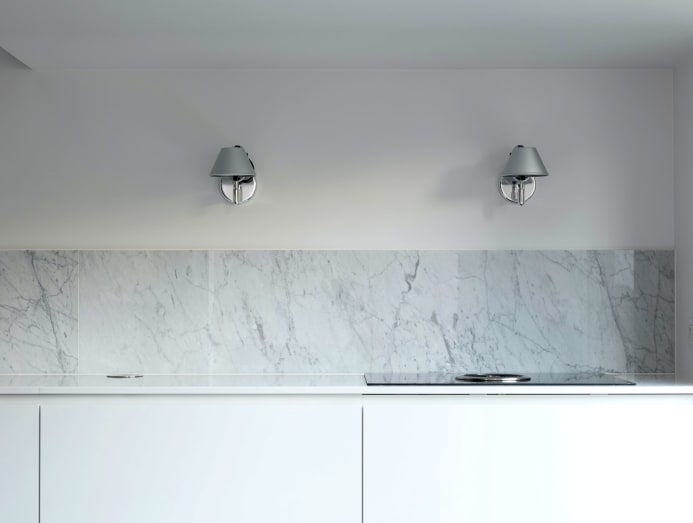
To reuse marble, information technology must e'er be broken downward into smaller pieces.
Artists and designers have had some success turning marble waste into high design. Hermes' sister brand, petit h, makes jaw-droppingly expensive terrazzo using fragments of Hermes' past, ornate fourth dimension capsules filled with marble, keys and metal clasps. Italian creative person Paolo Ulian uses offcuts of marble to make sculptural furniture for luxury interiors.
And d'Amman recently launched a collection of marble pieces crafted from the "graveyards" of Carrara quarries. She said, "There'south then much to do with what we accept, instead of quarrying once more."
Marble – as well as its peers quartz and granite – relies on centuries of geological compression to form. The sublime colours and markings coveted by renovators result from impurities in the boulder such equally atomic number 26 oxides and minerals that draw lines and veins as they are compressed and heated: A cartography of earth's history.
In 2006, a new sedimentary "rock" was discovered on the shores of Hawaii, later named "plastiglomerate". Forged by embankment bonfires, information technology was a rock that had layers of plastic fused into the grain, like to the veins in marble. "A layer of plastics in the earth's sediment is the footprint of people," Akiev said.
"If people exercise upwardly their kitchens every five years with materials that could concluding 100, that's more problematic than if a kitchen worktop is biodegradable or non." – Robin Grasby
Designers say the change must showtime with luxury interiors, with those with the resources to explore alternatives and gear up trends. "Not everyone can afford those materials, simply they see [pictures] and want to emulate them," said de Beaucourt. "There is a responsibility for those prescribing those designs."
Every country has its own stone, its own sustainable timber, its own craftsmen. The solution to more sustainable design may be an ancient one. Before the pandemic, de Beaucourt used to frequently fly halfway effectually the world for projects. "Nosotros were in such a blitz," she said.
She is now looking for artists, designers and environmentally friendly producers working near her home in Berlin for her designs. "What lockdown has shown me is that I want to stay put and find value in my local community."
Past Madison Darbyshire © 2022 The Fiscal Times
READ> Staying at abode more often? Hither's how to perk upwards your living space

Recent Searches
Trending Topics
Source: https://cnalifestyle.channelnewsasia.com/obsessions/home-renovation-using-marble-246806

Enregistrer un commentaire for "Redoing your kitchen or bathroom in marble? It may not be the most moral choice"